Platforms ·
Ethereum opens a resource hub for governments and aid organisations
The Ethereum Foundation published a public-sector resource website on 3 November, bringing together explanations, case studies and practical material for institutions considering the network. This is a resource launch, not a new government adoption agreement.
The Foundation’s case is that institutions can share verification infrastructure without giving one provider control over access. It also describes credentials that people hold themselves, with services checking authenticity without putting the underlying personal information on Ethereum. Those are design choices to assess, rather than a guarantee that every blockchain application protects privacy.
The announcement points to Bhutan’s digital identity system and a humanitarian coordination proof of concept. These have different levels of maturity: an existing implementation and an experimental design should not be presented as equivalent deployments.
For readers, the useful questions are concrete: what information stays private, who issues trusted credentials, and who is responsible when something goes wrong? The new material offers starting points for that assessment. It does not remove an institution’s responsibilities or prove that Ethereum is the right solution for every public service.
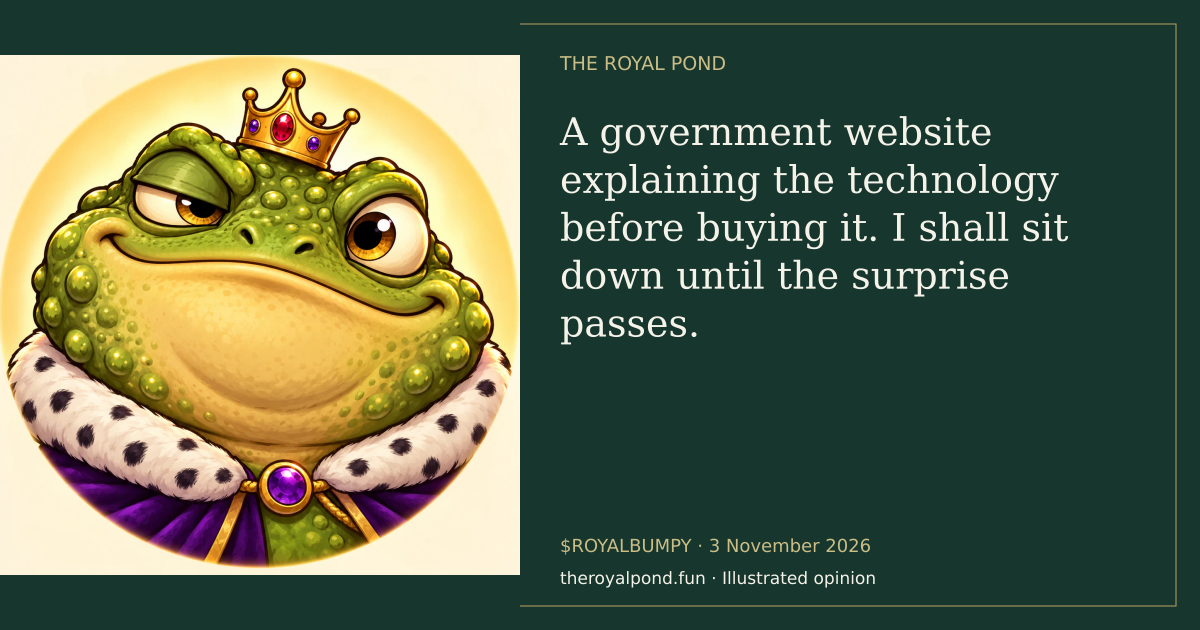
A government website explaining the technology before buying it. I shall sit down until the surprise passes.
The receipts
Worth passing round?
Send the story to a friend, or take Bumpy’s verdict card with you.
Have a question about this?
Take this story into our Telegram community. Bring a source, a question or a well-placed eyebrow.
Opens the community invite. Paste the story link into the conversation; nothing is sent automatically.Follow the thread.
Earlier reporting on these topics. Dates and original assessments stay attached.

This is the 3 November 2026 edition. Facts may have developed since publication. Read the latest briefing →