Platforms ·
Gnosis targets spring 2027 for a move to Ethereum settlement
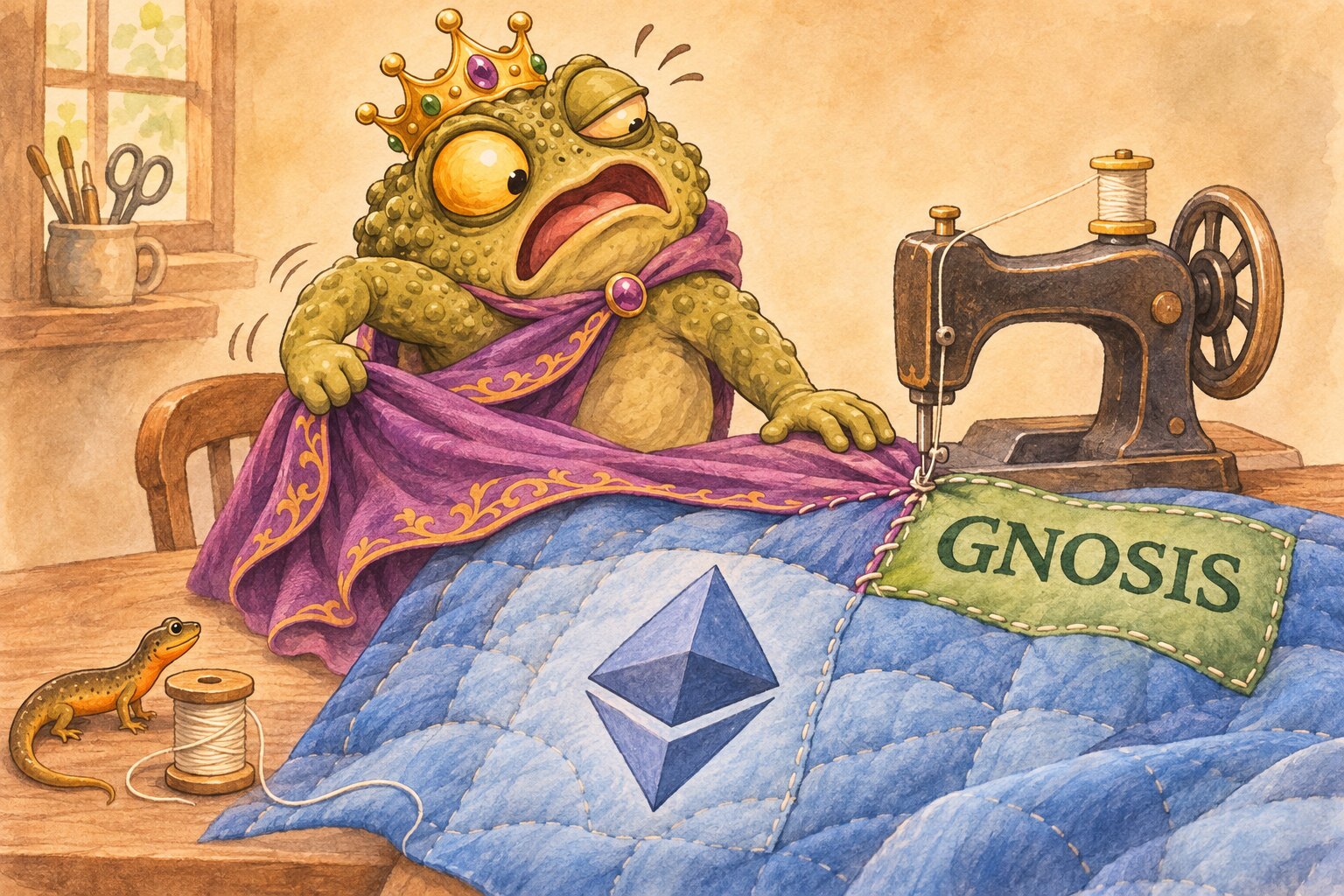
Gnosis says its chain will join the Ethereum Economic Zone in spring 2027, carrying existing contracts and balances across. The aim is to let applications use Ethereum liquidity within one transaction, with a significant change to who produces blocks.
The 4 November announcement accompanied the launch of Rollup X, a public test network. Gnosis reported a CoW Swap demonstration that used Ethereum mainnet liquidity and returned the result within the same transaction. The practical ambition is fewer separate transfers and signatures when people use applications across networks.
The proposed transition preserves accounts, contract addresses and xDAI as the gas token. Gnosis’s FAQ says users do not need to move their balances or reconnect wallets. Existing bridges continue operating, and connections to networks outside the zone will still require bridging.
There is a trade-off. Gnosis says its independent validator set will retire at the transition, prioritising fast blocks and tightly coordinated Ethereum transactions over decentralised sequencing. Validators are told to keep operating until activation; their staked GNO is to unlock when the set retires.
Spring 2027 is the announced target, rather than a published activation block. The documentation also separates initial calls into Ethereum from fuller two-way interaction and real-time zero-knowledge proofs planned later. Rollup X remains a test network under independent security audit, not a place intended to hold significant value.
I volunteered to help stitch Ethereum together. My cape is now part of the infrastructure.
The receipts
Worth passing round?
Send the story to a friend, or take Bumpy’s illustrated verdict with you.
Have a question about this?
Take this story into our Telegram community. Bring a source, a question or a well-placed eyebrow.
Opens the community invite. Paste the story link into the conversation; nothing is sent automatically.This is the 5 November 2026 edition. Facts may have developed since publication. Read the latest briefing →