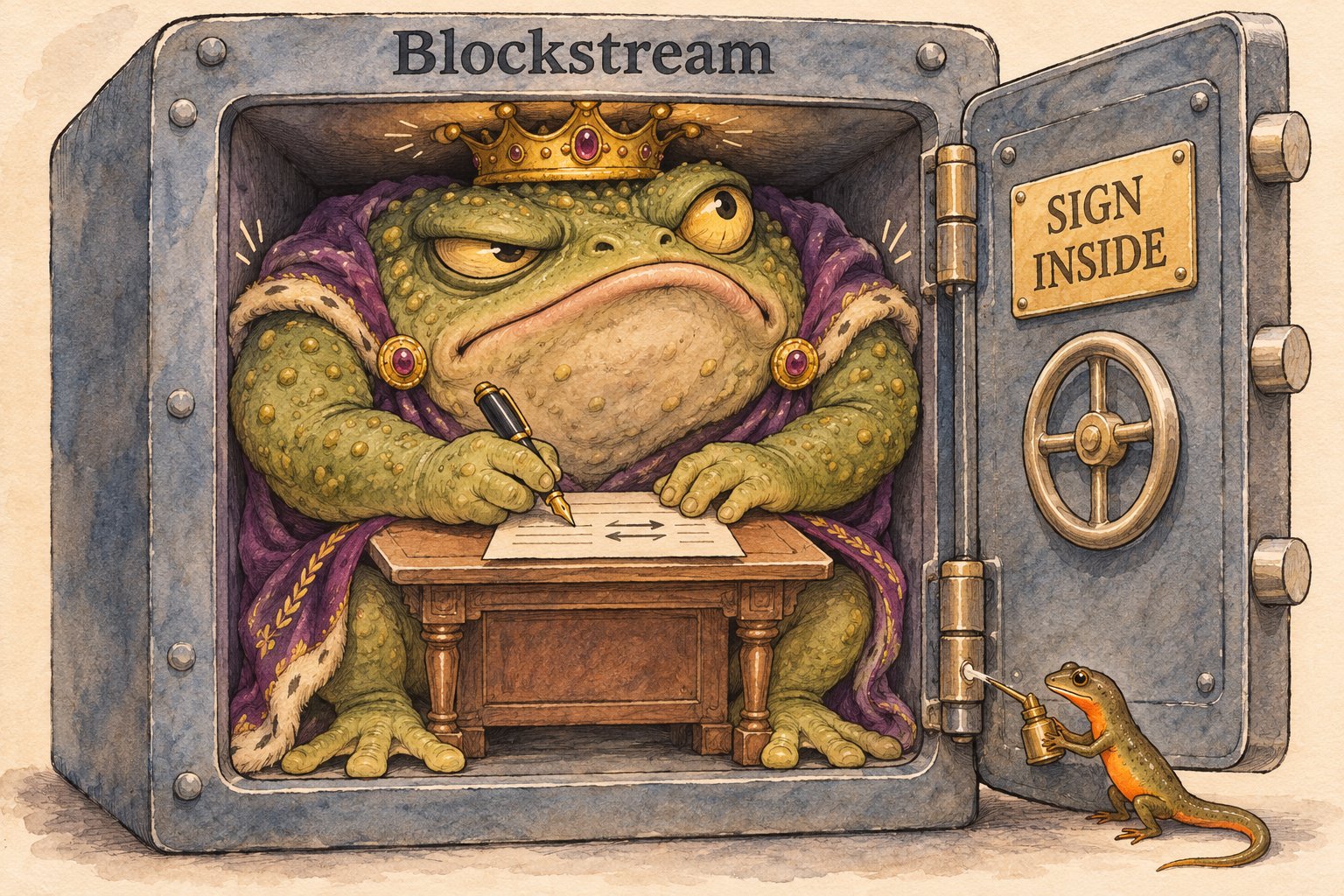
 Also covers SecurityBlockstream launches custody system that keeps transaction signing inside Thales security hardware
Security ·
Bitcoin signing drafts aim to stop compromised hardware leaking secrets through signatures
Bitcoin Optech's 13 November newsletter covers two draft proposals for anti-exfiltration signing. They would standardise a way for a wallet's host computer to contribute randomness and check its use, limiting one route for a malicious signing device to leak secrets.
A compromised device can manipulate the randomness used when creating a signature to smuggle out information about its secret key. The proposed interaction gives the host a contribution to that randomness and a way to verify that the signer used it. The drafts cover signing exchanges and fields in partially signed Bitcoin transactions.
Some hardware-wallet vendors already use anti-exfiltration techniques. The proposals seek an interoperable standard, supported by test vectors and reference code, rather than claiming to invent the entire approach. The author is asking for review, and the cryptography has not yet been audited.
This is draft wallet-protocol work, not an activated Bitcoin network upgrade or a promise that every hardware wallet now supports it. It also addresses a different threat from a physical implant reading a wallet screen. A signature check cannot retrospectively make an exposed recovery phrase safe.
I welcome a second hand checking the dice. I should still like someone to examine the table.
The receipts
Worth passing round?
Send the story to a friend, or take Bumpy’s verdict card with you.

Have a question about this?
Take this story into our Telegram community. Bring a source, a question or a well-placed eyebrow.
Opens the community invite. Paste the story link into the conversation; nothing is sent automatically.Follow the thread.
Earlier reporting on these topics. Dates and original assessments stay attached.
This is the 14 November 2026 edition. Facts may have developed since publication. Read the latest briefing →