Security ·
NEAR AI says a software flaw exposed account details and legacy agent data

NEAR AI's 9 November incident report says an SGLang vulnerability gave an attacker access to an inference server and internal systems. About 100 users' account details and data from 18 legacy agents were accessed; the company says the flaw is fixed and Cloud access restored.
The account information included email addresses, names and, for some people, plan and balance details. The 18 affected agents ran on a legacy deployment outside NEAR AI's confidential-computing environment; their chat histories, settings and logs were retrieved. Two Cloud customers had API keys exposed in logs, and those keys have been revoked, the company says.
The report makes an important distinction about conversations. NEAR AI found no indication that stored Private Chat conversations or uploaded files were accessed. However, requests being processed on the compromised server on 8 November could have been observed, including confidential-mode requests. Absence of evidence for access to stored chats is therefore not a blanket statement that no prompts were exposed.
The company explains that confidential computing protects data from the operator and host, but does not protect against vulnerable software running inside that environment. It says it rotated credentials, patched inference servers and contacted affected users directly. The useful lesson is about the boundary of a specific protection, rather than an assertion that the NEAR blockchain was compromised. Follow-up messages claiming to concern an account or balance deserve particular caution.
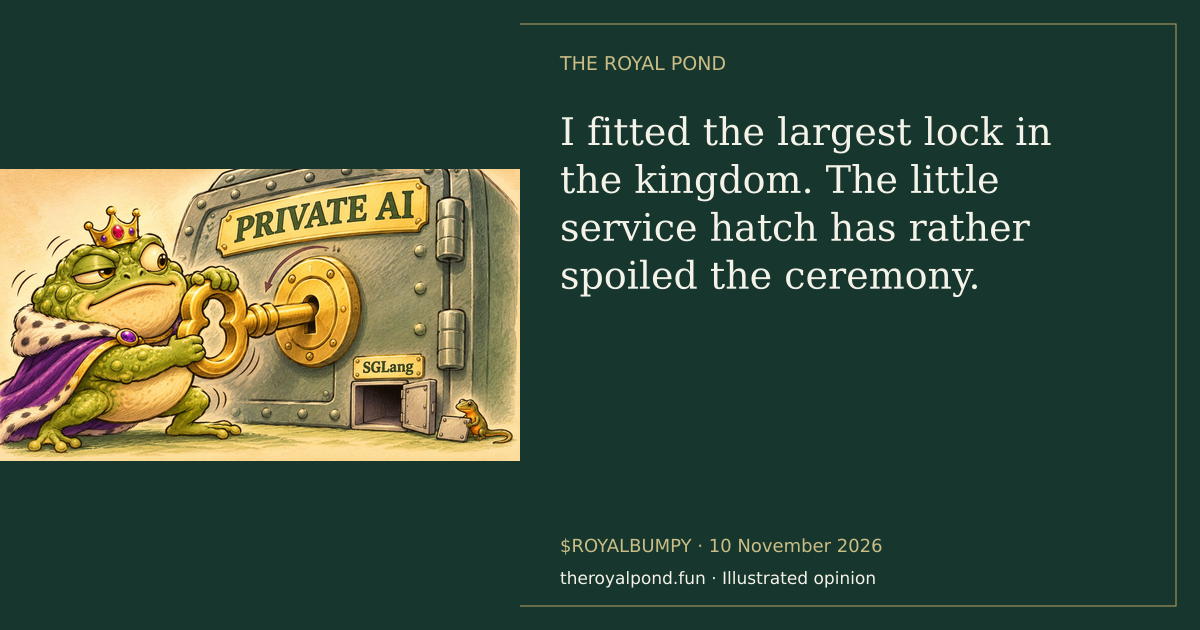
I fitted the largest lock in the kingdom. The little service hatch has rather spoiled the ceremony.
The receipts
Worth passing round?
Send the story to a friend, or take Bumpy’s illustrated verdict with you.
Have a question about this?
Take this story into our Telegram community. Bring a source, a question or a well-placed eyebrow.
Opens the community invite. Paste the story link into the conversation; nothing is sent automatically.This is the 10 November 2026 edition. Facts may have developed since publication. Read the latest briefing →