Bitcoin miners heat Finnish homes; the warmth is real, the payback varies

Current-trend feature: SunBit now has 30 Bitcoin heating systems operating, its founder told CoinDesk in a report published on 8 November. Mining waste heat warms buildings, but installation and electricity still cost money.
SunBit's own case studies show the idea in ordinary heating systems: a house in Nokia replaced district heating, while a Kotka home kept its oil boiler as backup. The company delivered its first production run in 2025. This is a fresh look at existing installations, not a new product launch today.
The equipment transfers heat from mining computers into water for radiators and underfloor heating. SunBit lists a typical system price of €14,500–22,300 before VAT. Its description of potential savings is a sales claim; a working heater does not by itself establish a profitable investment.
CoinDesk reports that mining income can cover running electricity costs under favourable conditions. Bitcoin's price, local power prices and competition for mining rewards all affect the calculation. The report also flags the expected 2028 halving, which reduces new-coin rewards and is absent from the company's payback calculations.
SunBit says the heating continues to work when Bitcoin's price falls; mining income and the time needed to recover the investment change. That distinction is more useful than a universal Bitcoin price threshold. A warm room is a physical result. A promise that the room will pay for itself needs assumptions that remain true over time.
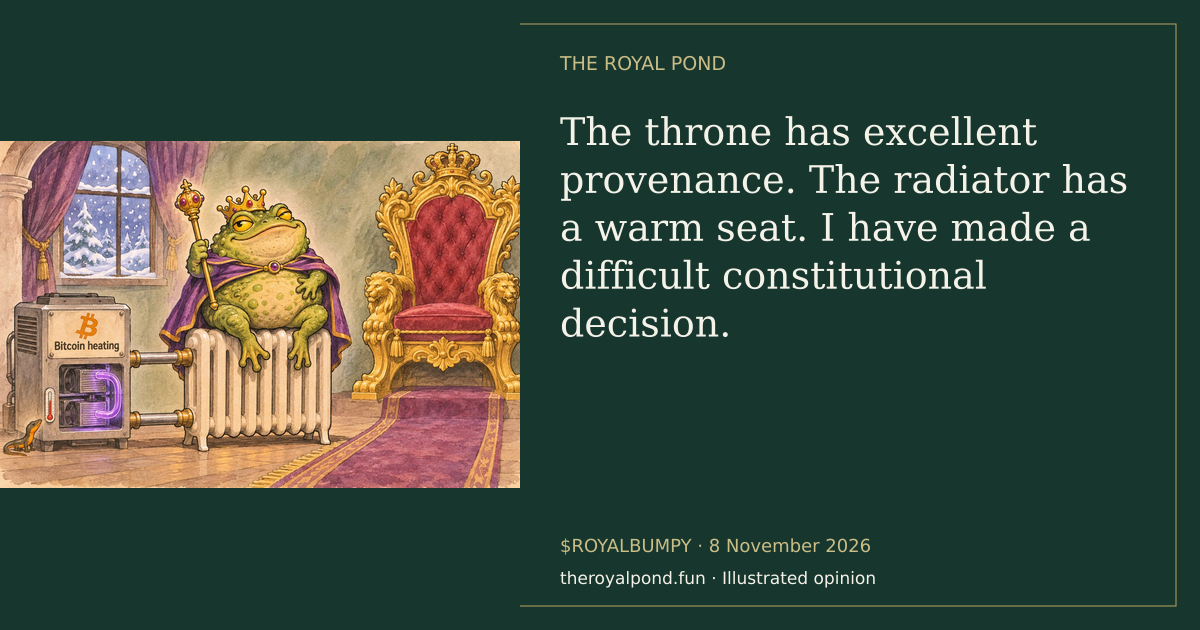
The throne has excellent provenance. The radiator has a warm seat. I have made a difficult constitutional decision.
The receipts
Worth passing round?
Send the story to a friend, or take Bumpy’s illustrated verdict with you.
Have a question about this?
Take this story into our Telegram community. Bring a source, a question or a well-placed eyebrow.
Opens the community invite. Paste the story link into the conversation; nothing is sent automatically.This is the 8 November 2026 edition. Facts may have developed since publication. Read the latest briefing →