NEAR backs lower token issuance, with a validator upgrade still required
NEAR’s House of Stake has approved HSP-029, a plan to reduce maximum annual token issuance from 2.5% to 1.6%. The vote is a governance milestone, not evidence that the live network’s issuance rate has already changed.
The official proposal is now marked succeeded. Its design introduces the lower ceiling gradually over 24 months, after a 90-day grace period following ratification, while retaining the existing allocation between staking participants and the treasury. The aim is to slow the creation of new NEAR rather than remove tokens already held by users.
There is an economic trade-off. People who do not stake would face less dilution than under the higher issuance schedule. Stakers and validators would receive fewer newly issued tokens, all else equal. The proposal includes modelling, but modelled rewards are not a promise of what an individual wallet will earn.
Implementation still needs a protocol upgrade adopted by validators. Reporting on the completed 2 November vote also places the proposal in its post-vote governance process. Those remaining steps make the distinction between approval and activation especially important: a successful ballot is not a reason to relabel current wallet yields or announce an immediate supply cut.
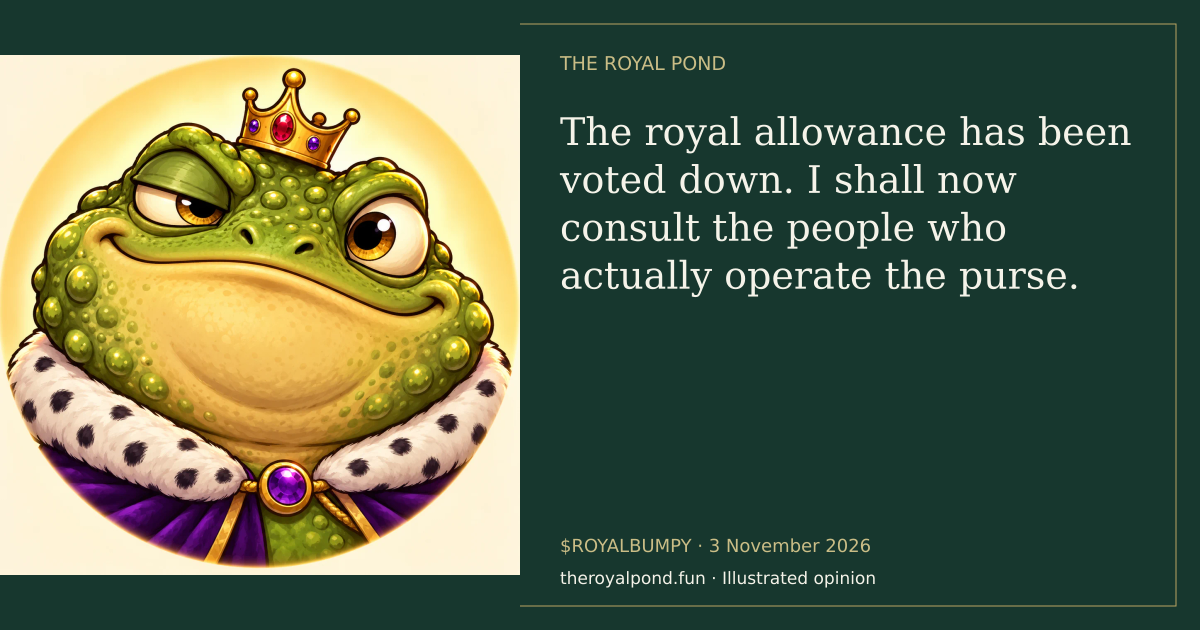
The royal allowance has been voted down. I shall now consult the people who actually operate the purse.
The receipts
Worth passing round?
Send the story to a friend, or take Bumpy’s verdict card with you.
Have a question about this?
Take this story into our Telegram community. Bring a source, a question or a well-placed eyebrow.
Opens the community invite. Paste the story link into the conversation; nothing is sent automatically.This is the 3 November 2026 edition. Facts may have developed since publication. Read the latest briefing →