Hong Kong's tokenised bank money gets a night shift.
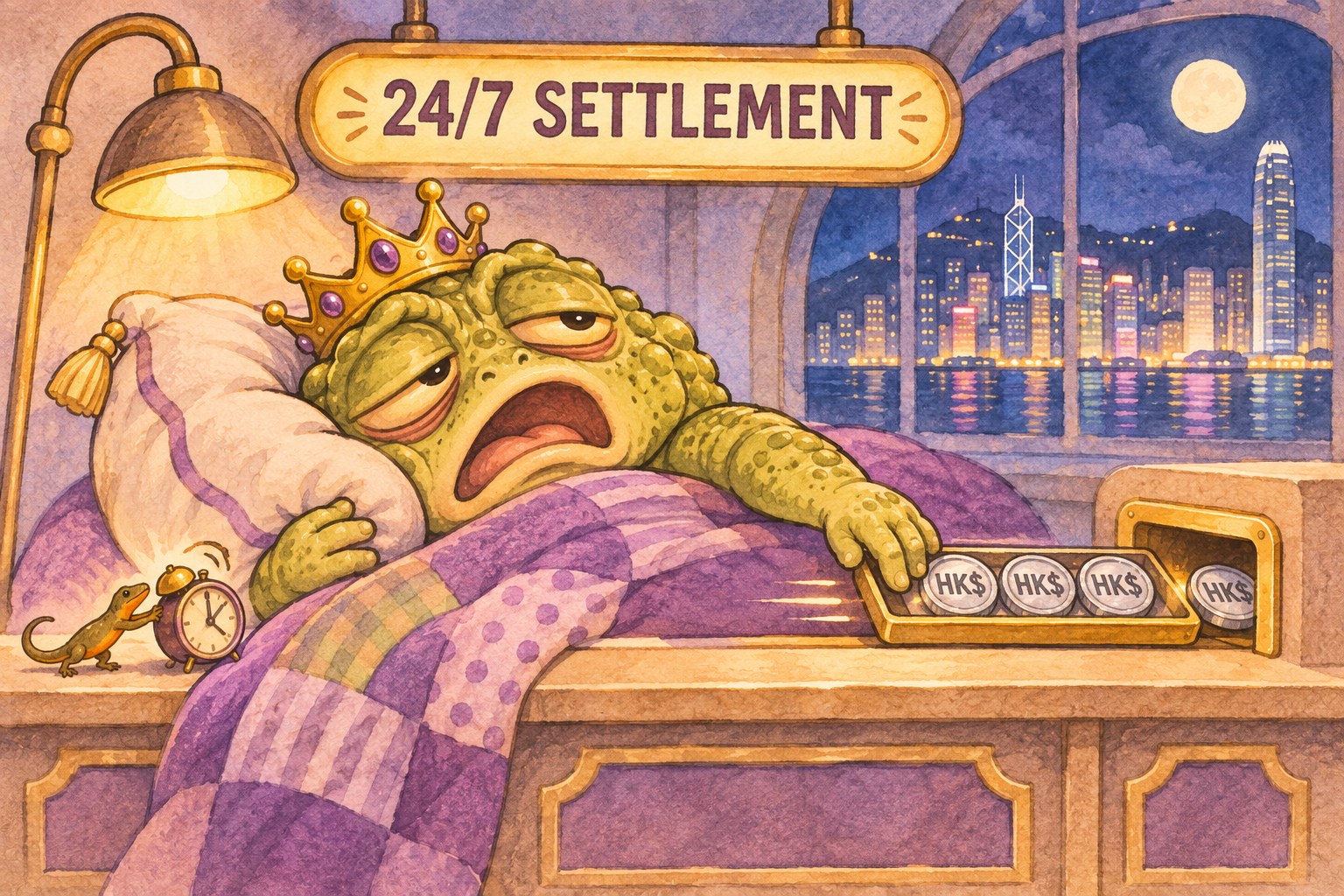
Hong Kong's monetary authority announced on 2 November that its Ensemble TX pilot now supports 24/7 interbank settlement of tokenised deposits using tokenised central-bank money. Twelve banks and 20 industry pioneers participate. The change lets participating institutions settle outside conventional operating hours; it is not a new public crypto wallet.
Settlement is the movement that completes a payment between institutions. A tokenised asset may be available to trade overnight while its payment arrangements still wait for banking hours. The HKMA says this upgrade addresses that mismatch for the pilot's participating banks and businesses. Tokenised deposits remain bank money represented digitally; the announcement does not turn them into Bitcoin or open this infrastructure to every wallet.
The pilot began in November 2025 using Hong Kong's existing dollar real-time settlement system. Its real-value use cases include corporate treasury transfers and tokenised money-market funds. The new arrangement uses tokenised central-bank money between banks. The release gives participant counts but no transaction volumes, so this is evidence of a new capability rather than proof of mass adoption.
In a separate FinTech Week announcement, the HKMA said dealers had completed secondary-market trial trades in tokenised Exchange Fund Bills. It plans to add regulated stablecoins to those trials soon, without a firm date. That next stage should be assessed when it happens. Today's confirmed change is the removal of the pilot's conventional settlement-hours constraint.
I asked for a bank holiday. They upgraded the bank and declined the holiday.
The receipts
Worth passing round?
Send the story to a friend, or take Bumpy’s illustrated verdict with you.
Have a question about this?
Take this story into our Telegram community. Bring a source, a question or a well-placed eyebrow.
Opens the community invite. Paste the story link into the conversation; nothing is sent automatically.This is the 2 November 2026 edition. Facts may have developed since publication. Read the latest briefing →