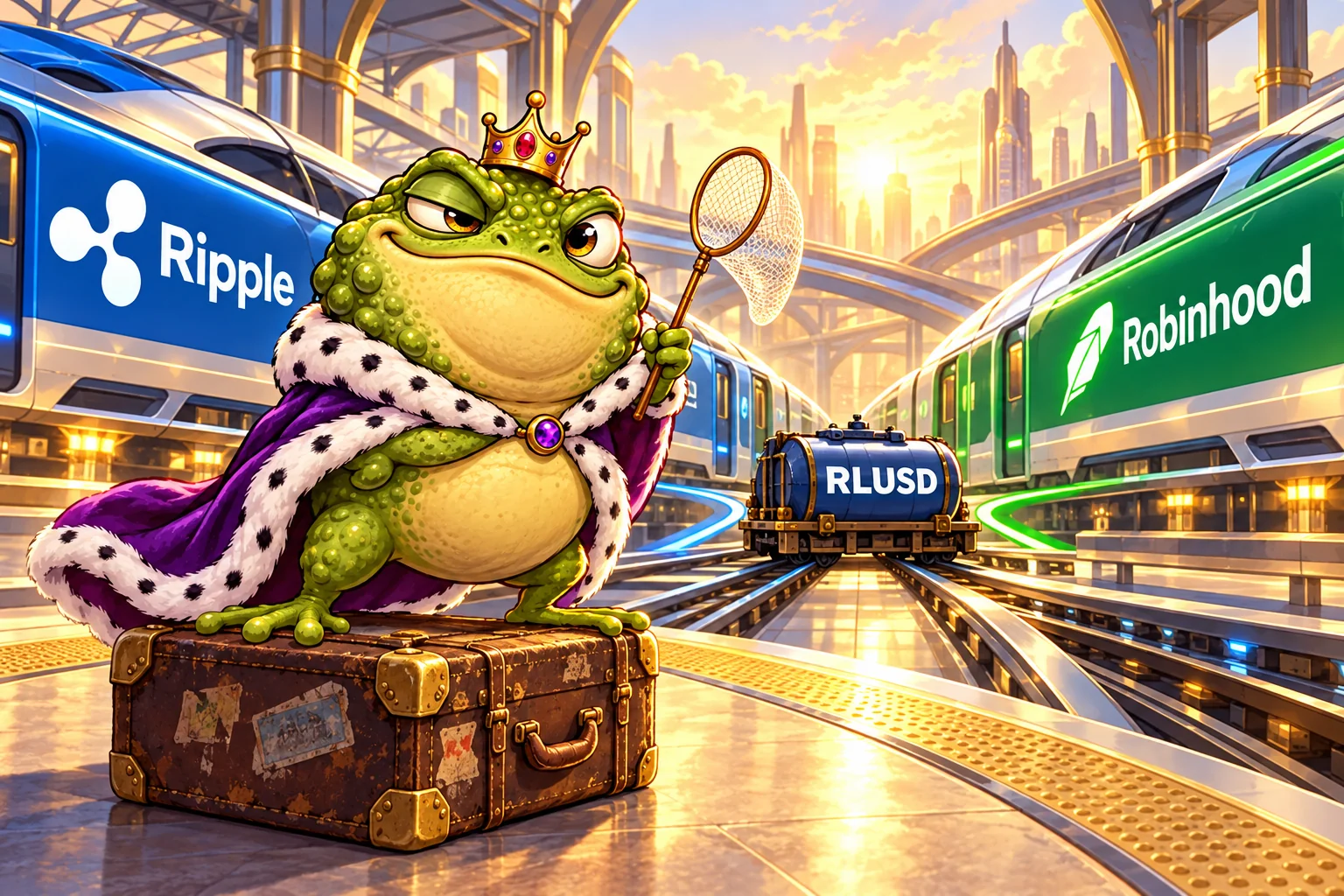
 Also covers RobinhoodRipple and Robinhood connect the rails. Check the timetable.
Platforms ·
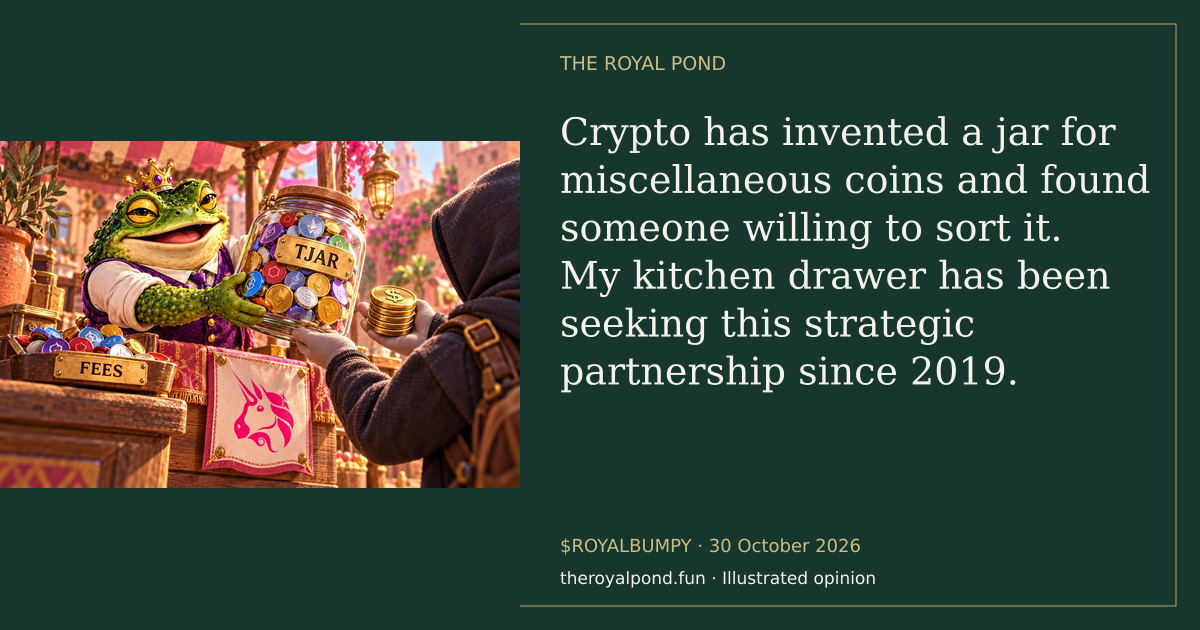
Uniswap has a jar for all those fee tokens. Someone else sorts the change.

Uniswap Labs announced TJAR on 29 October: a framework that lets applications collect fees in assorted assets and receive a chosen token in return. It says the system is live on seven chains and Robinhood already uses it for fees collected through the Uniswap API, receiving USDC and USDG.
An app sends collected assets to a Token Jar and configures a release price, payout token and destination. An independent searcher can pay that price in the chosen token to take assets from the jar. The operator therefore delegates the task of handling the mixed inventory, rather than building a separate conversion process for every incoming token.
The developer documentation makes a useful distinction: the jar does not price its contents. The release threshold stays fixed until the operator changes it. Searchers decide whether the available assets are worth the payment and transaction costs. That explains the incentive to empty a jar; it does not promise that every deposit will be converted immediately.
Operators can change the release terms or permanently freeze the configuration. The contracts themselves are immutable, but configurable settings and ownership still matter. This is infrastructure for managing fee revenue, rather than a new savings product or a promise of returns to people holding the tokens involved.
Crypto has invented a jar for miscellaneous coins and found someone willing to sort it. My kitchen drawer has been seeking this strategic partnership since 2019.
The receipts
Worth passing round?
Send the story to a friend, or take Bumpy’s illustrated verdict with you.
Have a question about this?
Take this story into our Telegram community. Bring a source, a question or a well-placed eyebrow.
Opens the community invite. Paste the story link into the conversation; nothing is sent automatically.Follow the thread.
Earlier reporting on these topics. Dates and original assessments stay attached.

This is the 30 October 2026 edition. Facts may have developed since publication. Read the latest briefing →