Everyone brought a scoreboard. I brought a whistle.
Solana apps compete for your thumb, tokenised shares become loan collateral, and a vendor incident tests the perimeter of a crypto fortress. Elsewhere, a yen connection is being sketched and a new foundation promises practical help. Five stories, with dates, sources and a toad who has appointed himself referee.
Editorial illustration · 29 October 2026THE ROYAL DECREE · OPINION
A user count is not a volume figure. A blueprint is not a bridge. A launch is not an outcome. A whistle, however, is tremendous fun.
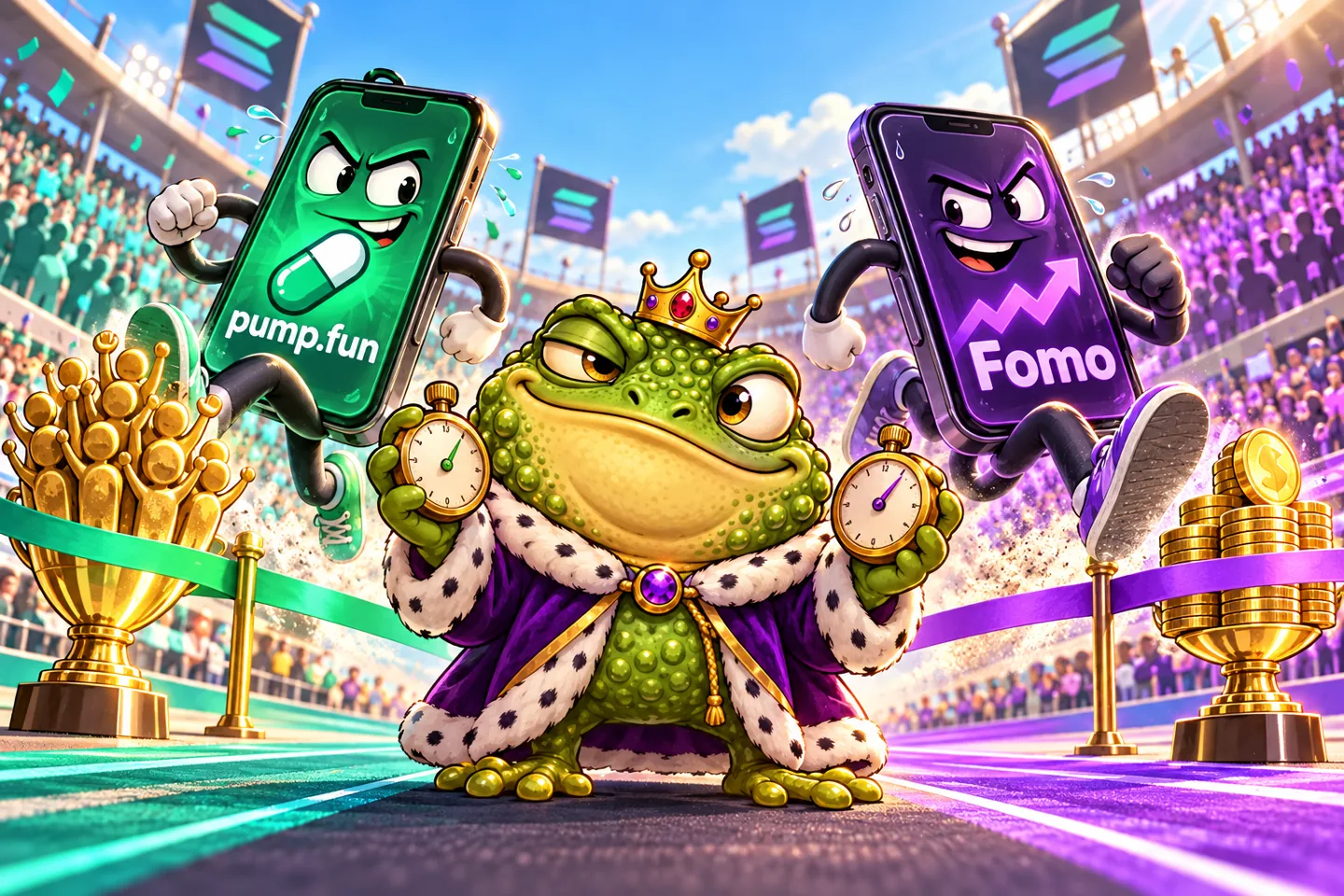
Current trend: Solana trading apps are competing on different scoreboards. Blockworks’ 26 October analysis reported Pump’s average daily Solana volume at $29 million versus Fomo’s $32 million for the preceding week, while daily traders were 72,000 versus 58,000. That puts Pump ahead on the reported trader metric, but behind on volume. These are dated activity measures, not live figures or a count of unique people.
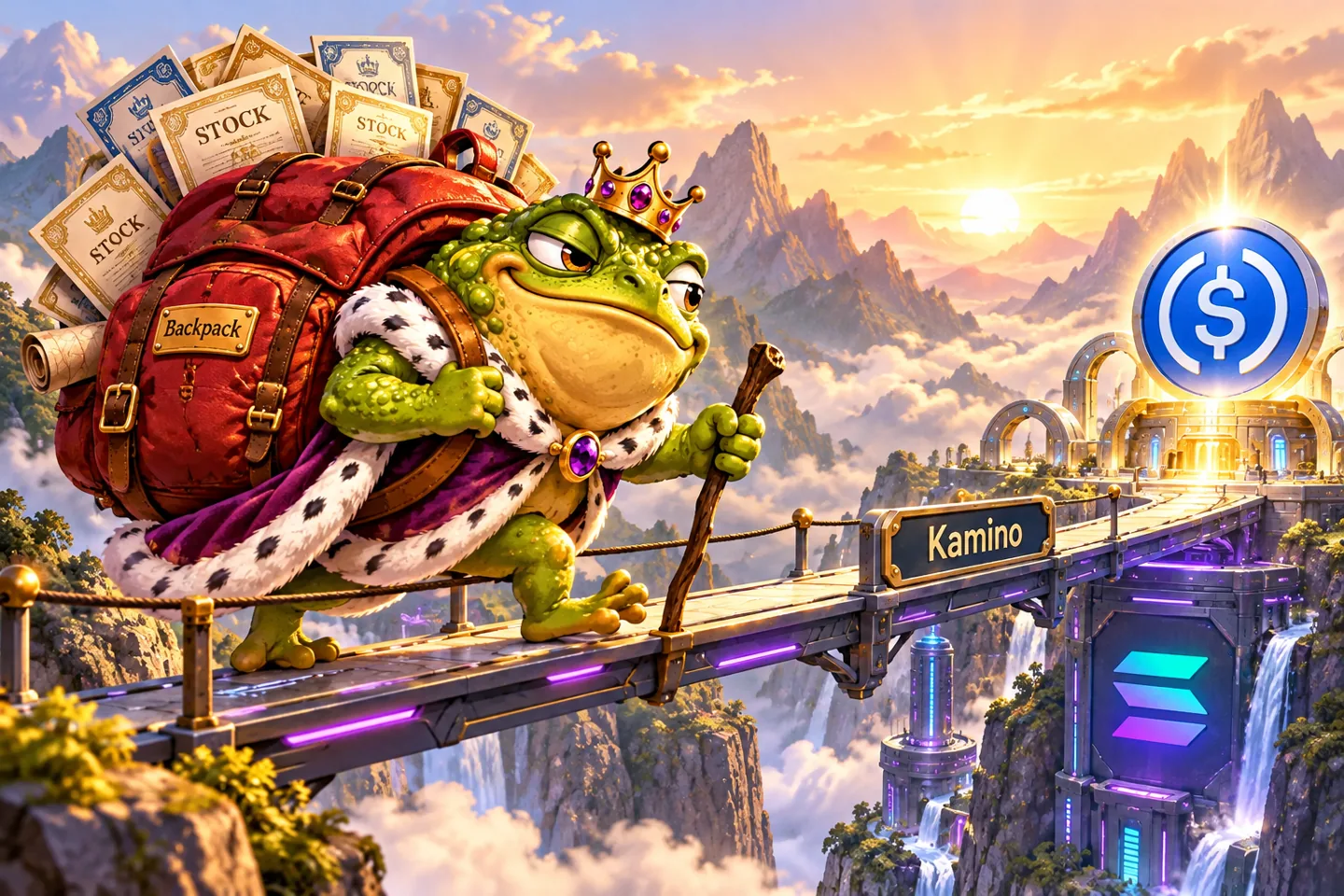
Kamino’s 29 October announcement says eligible holders can now use Backpack Securities tokenised equities as collateral to borrow USDC on Solana. Backpack describes the tokens as backed 1:1 by underlying US-listed shares. The isolated Backpack Market has asset-specific borrowing and liquidation parameters. Borrowers retain stock-price exposure, but falling collateral values can trigger liquidation; eligibility and redemption remain subject to Backpack’s terms.
Coinbase told Unchained on 28 October that an incident at analytics provider Amplitude exposed some customer contact and limited transaction data. It said home addresses and account-access information were not involved, funds were unaffected, and it found no evidence of unauthorised access to Coinbase systems. Coinbase says it is notifying affected customers and regulators. The report gives no confirmed affected-customer count.
On 27 October, SBI Holdings and Startale announced a memorandum of understanding with BlackRock entities to explore connecting tokenised money-market funds with JPYSC, a yen-denominated trust-type stablecoin. The work covers technology, distribution and regulatory considerations. This is an agreement to investigate a connection, not an announcement that the combined service is already open to customers.
Tether announced the FASE Foundation on 28 October with industry and nonprofit collaborators, including the Solana Foundation, and UNODC as a strategic partner. Initial plans cover youth scam-prevention education, support for trafficking survivors and a stablecoin humanitarian-aid pilot with Prosper Global. The foundation has launched; its proposed reach and programme outcomes remain goals to be demonstrated.